

On Environment with Finola O’Kane: “Plantation Islands: The First Blueprints for Colonialism?”
Lecture Series
14.01.2026 at 18:00
Location: A125, LMU Main Building, Geschwister-Scholl-Platz 1, 80539 Munich
This lecture will be given by Finola O’Kane (University College Dublin).
Plantation islands were key testing grounds for European colonization, their clear figures easily conceived in the mind’s eye, with rivers meeting coastlines to generate port cities. At a smaller scale plantation landscape design became a global initiative for exploiting regions that were unlike mainland Europe. Drawn from the design of the landed estate, plantations structured new territory by combining the practical demands of farming and improvement with the villa’s long and sophisticated aesthetic tradition. This lecture will comparatively analyze plantation paradigms from Ireland, Jamaica, and Saint Domingue (Haiti) arguing that such island landscapes, many still substantially unresearched, remain some of imperialism’s most significant, calculated, and damning designed environments.
Finola O’Kane is a landscape historian, architect, and professor at the School of Architecture, Planning and Environmental Policy, University College Dublin. Her books include Landscape Design in Eighteenth-Century Ireland: Mixing Foreign Trees with the Natives (Cork, 2004), Ireland and the Picturesque: Design, Landscape Painting, and Tourism, 1700–1840 (PMC/Yale, 2013), and the recent Landscape Design and Revolution in Ireland and the United States, 1688–1815 (PMC/Yale, 2023). O’Kane has also published widely on eighteenth-century Dublin, Irish urban and suburban history, and plantation landscapes, with the co-edited volume Ireland, Slavery and the Caribbean: Interdisciplinary Perspectives published in 2023 by Manchester University Press.
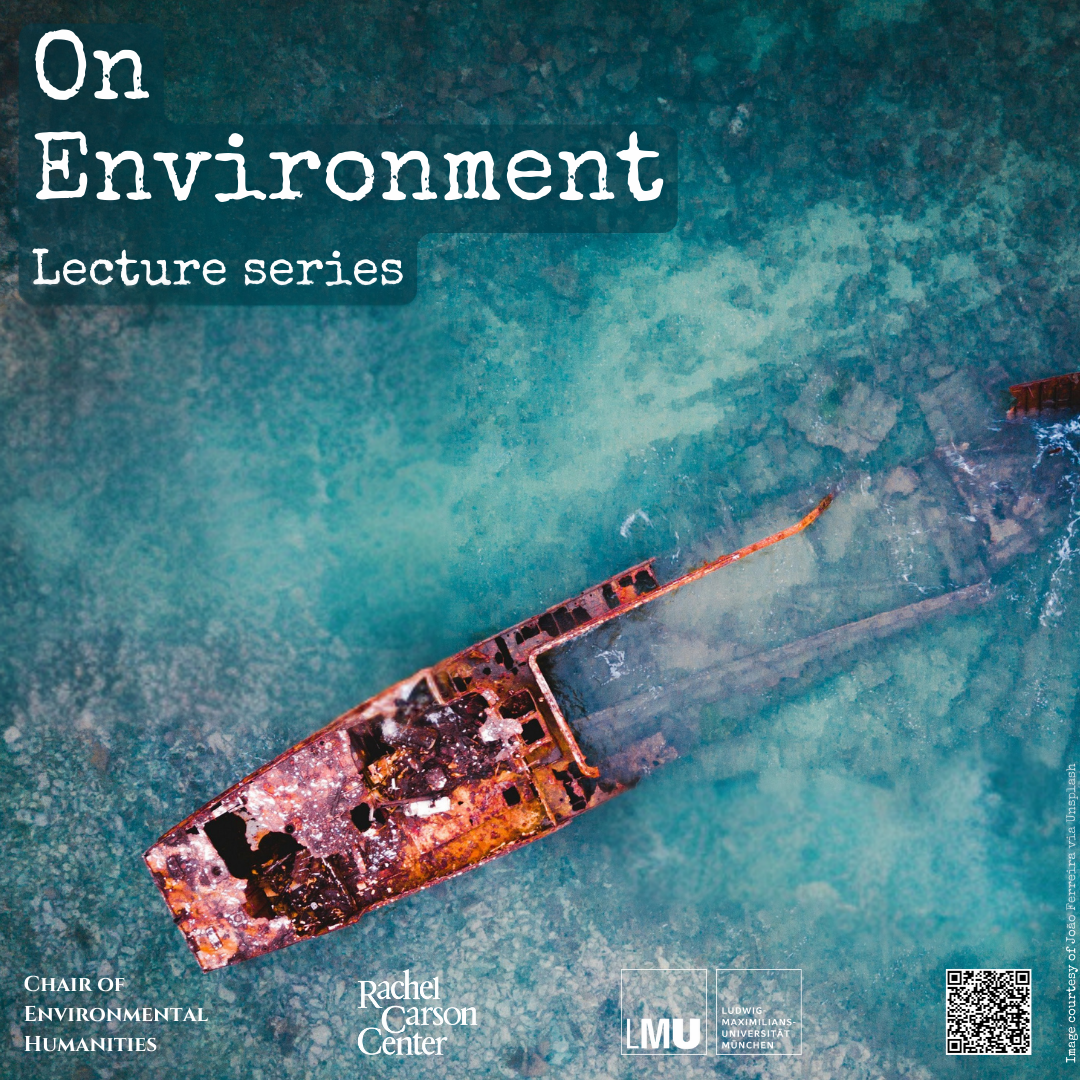
This event is part of the lecture series “On Environment.” The series is organized by the Chair of Environmental Humanities at the Rachel Carson Center for Environment and Society.
Environment is a broad conceptual idea with a history and many meanings. Today, the term is used ubiquitously. We are closely connected to what surrounds us and live in an environment more and less shaped by humans. In this series of lectures scholars from different disciplines address the concept, providing a lens into what it may mean to think environmentally.