

On Environment with Deborah Coen: “The Atmospheric Commons: Towards a Usable History of Climate Science”
Lecture Series
17.06.2026 at 18:00
Location: A125, LMU Main Building, Geschwister-Scholl-Platz 1, 80539 Munich
This lecture will be given by Deborah R. Coen (Yale University).
Contemporary science and policy have turned adapting to climate change into a zero-sum game that pits communities against each other in a competition for international aid. Implicit is the assumption that change begins on the global level, setting the parameters to which local communities must reactively adapt. Deborah Coen’s new book, Stewards of the Sky, shows that this problem has deep historical roots: For over two centuries, scientists have tried and failed to predict how people will respond to the vagaries of weather and climate. On the sidelines of this tragic quest, Coen has found a forgotten alternative: a grassroots atmospheric science. She will present an overview of this research and an explanation of her method, which she calls “usable history of science.”
Deborah R. Coen is professor of history and history of science & medicine at Yale University, where she is also a member of the steering committee of the Environmental Humanities Program. Her research focuses on the modern physical and environmental sciences and on central European intellectual and cultural history. She also writes and teaches about feminism, disasters, and all things Viennese. She is the author, most recently, of Climate in Motion: Science, Empire, and the Problem of Scale. Forthcoming from the University of Chicago Press in 2027 is Stewards of the Sky: The Women Who Brought Climate Change Down to Earth.
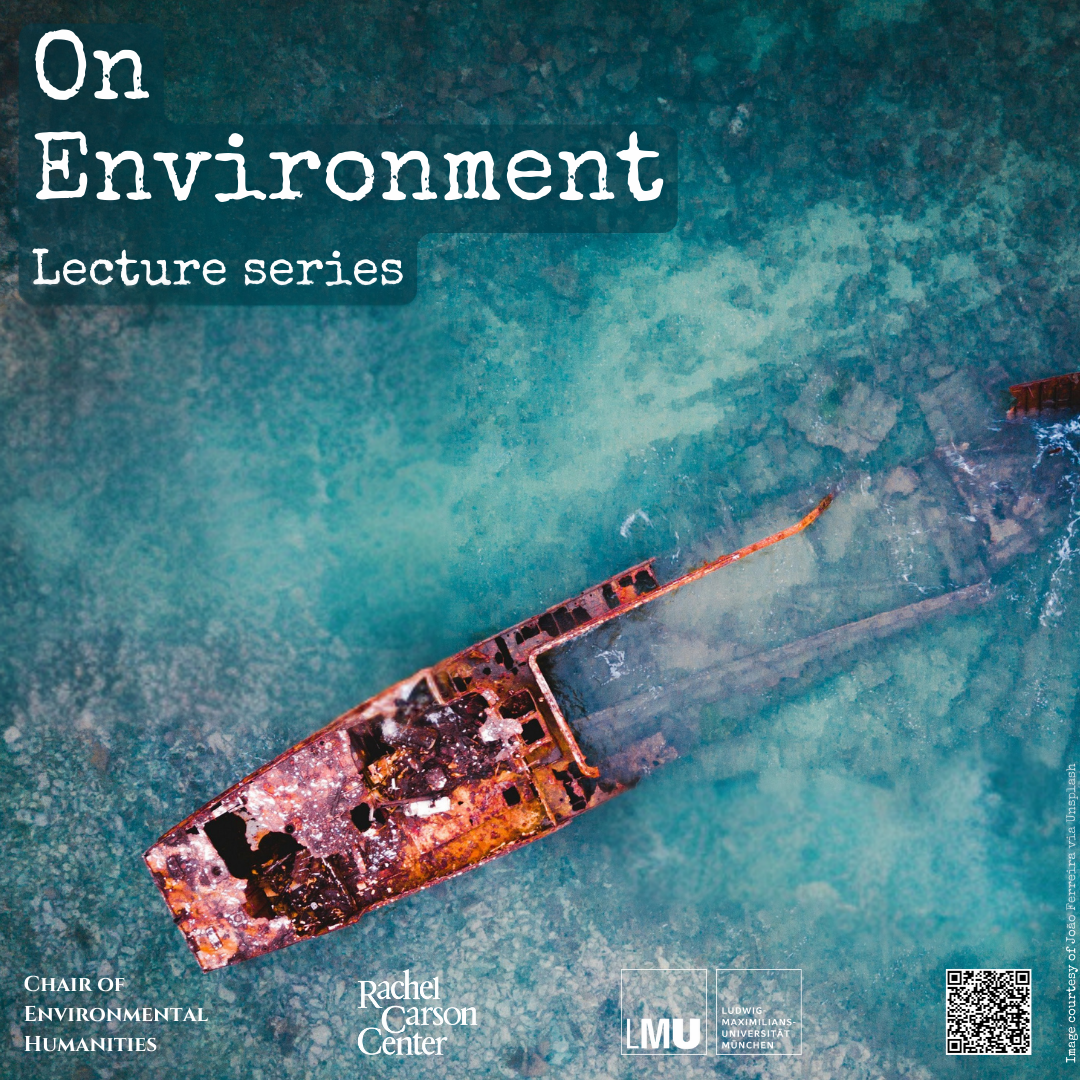
This event is part of the lecture series “On Environment.” The series is organized by the Chair of Environmental Humanities at the Rachel Carson Center for Environment and Society.
Environment is a broad conceptual idea with a history and many meanings. Today, the term is used ubiquitously. We are closely connected to what surrounds us and live in an environment more and less shaped by humans. In this series of lectures scholars from different disciplines address the concept, providing a lens into what it may mean to think environmentally.