

Rethinking Wetlands (ReWet): An Environmental Anthropology of Wetlands
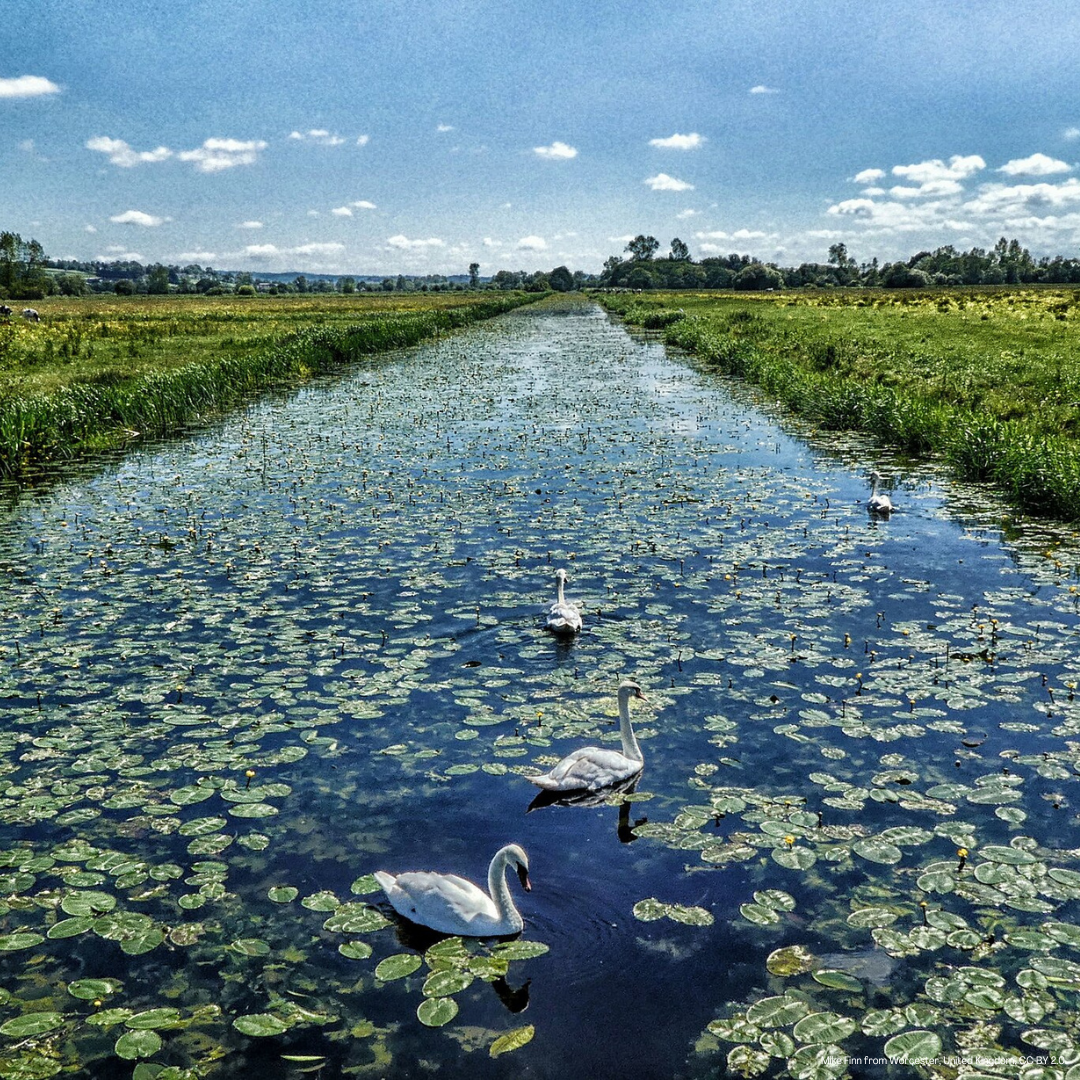
Wetlands are meshworks of socioecological relations—environmentally vital and crucial to both the history and the economies of the Mediterranean—that over the course of the twentieth century underwent a progressive process of marginalization and degradation. Since the 1970s, the Mediterranean basin has lost approximately half of its wetland areas, a loss driven by land-use change, the overexploitation of water resources, and the accelerating effects of climate change. Accordingly, wetland protection has become a priority, and it depends on conservation initiatives that require collaboration with local communities—often affected by, and at times in opposition to, conservation policies.
ReWet approaches these environments not merely as ecological systems in need of protection, but as environments of life emerging along complex socioecological relationships between human and other-than-human beings. Drawing on social anthropology, environmental history, and political ecology, the project investigates how communities—fishers, farmers, herders—have historically contributed to maintaining the very ecologies that conservation science now seeks to preserve. A central argument of the project is that wetlands are transitional environments: Without active intervention they tend to give way to either fully aquatic or terrestrial ecosystems. Historically, this transition has been managed not by conservation agencies, but by the everyday practices of those who worked in wetlands. Today, these activities are often overlooked by conservation frameworks that privilege ecological over economic and cultural values, generating conflicts that ultimately harm both communities and environments.
To understand these dynamics, ReWet conducts ethnographic and archival research across different places in Italy, such as: the Gulf of Oristano (Sardinia), the Pontine Marshes (Lazio), the Simeto Plain and the Plain of Catania (Sicily), and the Lagoon of Caorle (Veneto). Exploring and comparing histories, narratives, activities, and imaginaries, as much as the science and techniques involved in wetland management, the project develops a wetland anthropology that understands these environments beyond narrow ecosystem definitions—as water infrastructures entangled in wider hydrological networks and hydrosocial lifeworlds, and as concretions of knowledges, practices, politics, and multispecies relations.
Such an approach expands existing literature on wetlands by adopting the theoretical and analytical contours of the Anthropocene as a “mode of scholarship” aware of the interconnectedness of social, geological, and climatological regimes. By drawing on the changing complexity of wetlands and on the field of relations on which they depend, ReWet will advance anthropological knowledge on environmental conservation in the wake of climate change. At the same time, by unveiling the historical constitution of wetlands, this project and its outcomes will lay the foundations for a wetland anthropology at the intersection of the social and natural sciences, and the humanities.
The project is funded by a DFG Eigene Stelle research grant running from November 2024 to October 2027 and led by Dr. Paolo Gruppuso.
Publications:
- Paolo Gruppuso, “City Wetlands: Unsettling Topography of Urban Liquefaction.” In Urban Liquefaction: Rethinking the relationship between Land and Sea, edited by Cristián Simonetti, Michel Lussault, and Tim Ingold. Punctum Books, 2026.
- Paolo Gruppuso, “Keeping the Land Wet: ‘Wet Lands’ and the Rise of ‘Wetland Literacy.’” In Amphibious Anthropologies: Living in Wet Environments, edited by Alejandro Camargo, Luisa Cortesi, and Franz Krause. University of Washington Press, 2025.
- Paolo Gruppuso and Franz Krause. “Displacing the In-Between: Wetlands, Urbanity and the Colonial Logic of Separation.” In Beyond Perception: Correspondences with Tim Ingold’s Work, edited by Caroline Gatt and Jan Peter Laurens Loovers. Routledge, 2025: 65–80.
- Sara Asu Schroer, Paolo Gruppuso, and Andrew Whitehouse. “Editorial: ‘Taking Care Together’: Conservation as More-than-Human Process.” Environmental Values 34, no. 6 (2025): 425–33. https://doi.org/10.1177/09632719251394252.
- Paolo Gruppuso and Erika Garozzo. “Walking a Sicilian River.” Springs: The Rachel Carson Center Review, no. 7 (May 2025). https://doi.org/10.5282/rcc-springs-15268.
- Paolo Gruppuso, Stefano Mangullo, and Anna Maria Tomassini, eds. Le Paludi Contese. Storie e narrazioni delle Paludi Pontine tra Ottocento e Novecento. Casa dell’Architettura Edizioni, 2025.
- Paolo Gruppuso, “In-Between Solidity and Fluidity: The Reclaimed Marshlands of Agro Pontino.” Theory, Culture and Society 39, no. 2 (2022): 53–73. https://doi.org/10.1177%2F02632764211038669.
- Paolo Gruppuso. 2014. ‘Nell’Africa Tenebrosa alle Porte di Roma’: Viaggio nelle Paludi Pontine e nel loro immaginario. Annales Edizioni, 2014.